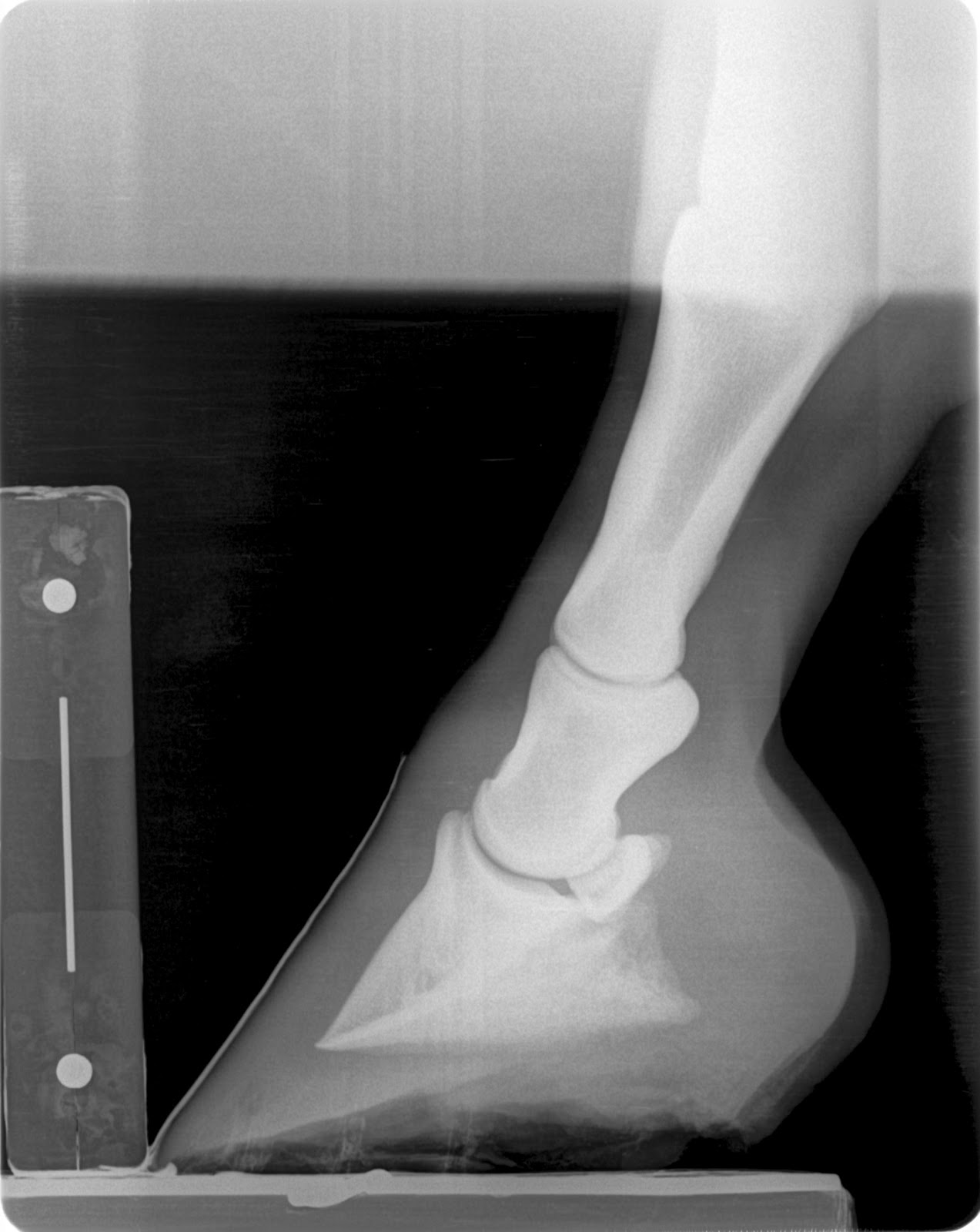
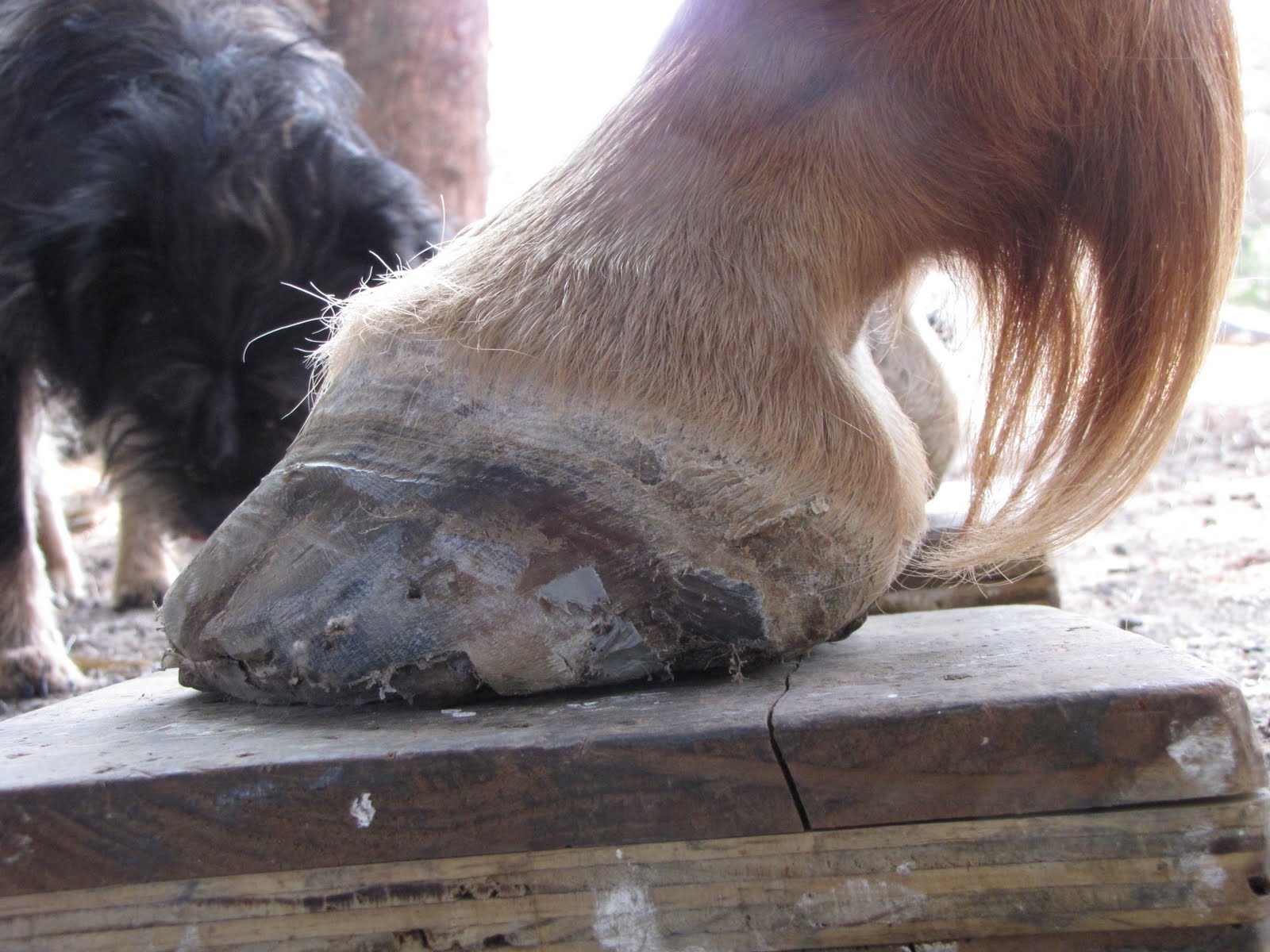
Welcome, About us

Hello and welcome. My name is Sammy L. Pittman, DVM and I am a veterinarian, farrier, and horsemen with a great interest in the field of equine podiatry. My wife and I own and operate Innovative Equine Podiatry and Veterinary Services in Collinsville TX. My passion lies within the health and well being of the hoof to better serve your equine companion. With so much lameness attributed to the lower limb many horses require an out of the box approach to achieve the success desired.
Give us a call and we will be glad to help you in any way we can. Thanks so much.
I will be discussing different Cases and thoughts from our world with the horse. Feel free to contact us via text or call at 903-718-0056 or send an email to iepvs11@gmail.com. Thank you for reading and enjoy
Showing posts with label rocker rail. Show all posts

Thursday, May 30, 2013

New navicular case study

    This is a 9 year quarter horse gelding that has had lameness issues since he was 3-4 years old.  He has never been used outside of light training.  I feel this type of navicular bone disease must have a genetic component as lesions where noted at an early age.  This horse responded early on to low level mechanics that included a four point style shoe with digital breakover at the tip of p3.  It progressed to needing significant mechanical enhancement but did respond to the enhanced mechanics applied  via a rockered 4 point rail shoe.  The horse was 4/5 bilateral lame on front before shoeing and 1/5 immediately post shoeing.  A significant improvement was noted after the below shoeing method.  The horse was euthanized due severity of disease and dissection was performed to further evaluate the navicular bone and compare to the radiographs.  You will see below the lucent lesions noted in the high beam dorsopalmar radiographs and the 65 dg dorsopalmar radiographs.  These lesions are present on the flexor surface of the navicular bone in which interacts with the flexor tendon.  Note the tissue protruding from the lesions.   This is tendonious tissue that has grown into the tendon and anchors the tendon to the navicular bone.  I can imagine that at lower palmar angle the attachment tugging at the navicular bone lesions is terribly painful.  This also explains why an increase in palmar angle and reduced digital breakover that reduced leverage and tension on the DDFT is so very helpful in this situation.

     Many medical therapies are used in treatment of  navicular disease however without appropriate mechancial treatment many medical therapies only offer temporary relief.  Bursa injections, coffin joint injections, isoxoprine and tildren are common treatments.  But you can see that without mechanical therapy that offers appropriate physical relief it can be difficult to manage.  Cases like this can be difficult to manage at a performance level long term with mechanics and medical therapies and all but impossible without mechanical therapy.


Note the lucent regions on the radiographs and the corresponding lesion below.  The tendon has grown into the navicular bone secondary to years worth of the tendon rubbing against the roughened flexor surface of the navicular bone.  This causes abrasions on the tendon that leads to the adhesions connecting it to the navicular bone.

Viewing from front of hoof with navicular bone flipped up to expose the flexor (back) surface of the navicular bone in which the tendon glides over then attaches to coffin bone.
Note the two adhesions on flexor surface.  These where cut away from tendon 

This drawing shows the DDFT in green and adhesions in red
 The above drawing shows the ddft (green) coursing over the navicular to attach to the palmar surface of the coffin bone.  The adhesions (red) are drawn in between the flexor surface and the tendon.

     Below are pre- and post-shoeing radiographs.  Note the drastic changes in palmar angle, tendon surface angle and distance of navicular bone to the condyle of proximal second phalanx (short pastern).  In the rocker shoe the system is  now a self adjusting mechanism with greatly decreased load on lesions and a greatly reduced leverage on the ddft.  Again, this horse's lameness improved at least 80 percent with application of this shoe.


Sunday, January 13, 2013

Theory of two major loads article


Theory of Two Loads


            I have struggled with what forces are involved in the hoof and how they changed with different palmar angles and varying degrees of deep digital flexor tension (DDF). So to aid in my understanding I consider two extreme examples to help describe my simplified idea of two major loads within the hoof capsule.  First I will describe tendon load (TL) and the extreme example to be used is a high grade club.  Next we will discuss bone load (BL) or ram load with the extreme example of a post ddf tenotomy laminitis case. 
             I think we can all agree that there is a significant pull from the DDF in club foot cases.  Lets consider the action of the DDF.  As weight is applied to the limb or the DDF muscle contracts the  pulling force is transferred to the coffin bone via the semilunar crest at the DDF tendon insertion.  This pulls the coffin bone around its articulation with the distal end of the second phanlanx (P2) and the DDF tendon also is pressed against the flexor surface of the navicular bone.  Extraction forces are apparent at the horn-lamellar interdigitation and compression forces on the solar corium directly beneath the apex of the coffin bone.  Club feet are affected by a shortened musculotendonous unit via increased neurologic stimulation of the flexor muscle.  This tranfers load to the apex of the coffin bone and the horn-lamellar interface at the toe.  So for simplicity sake consider two lengths of rope both attached above carpus and at the semilunar crest of coffin bone.  The shorter length will transfer more load to the apex than the longer when weight is applied to the limb.


                                              Figure 1 short rope/high pa/club
                                                         
                                            Figure 2 Longer Rope/low pa/slam dunk


These forces and the changes implied are noted on radiograph's of club feet, as a remodeled tip of coffin bone, a small bump midway down on the face of P3 and often smaller,and a less dense navicular bone.  These changes follow Wolfes law of bone remodels along lines of tension and compression.  Now consider the external characteristics of this extreme example:  Atrophied frog, deep central sulcus, wider growth rings at heel than toe, bulging or flat sole at and around apex of frog.  These characteristics are created by the excessive DDF tension which allows for an unbalanced load distribution between tendon load and bone load.  This excessive TL prevents loading and stimulation of the palmar portion of the hoof and leaves the frog and heel suspended in the air.

.              
Figure 3 bone remodeling on tip of coffin bone


            The second load to consider is bone or ram load (BL).  This is the weight that is transferred through the bony column directly to the ground.  If no DDF was present then all load is distributed through this manner and forces are increased in the heel region.  Consider the case of a post deep digital flexor tenotomy when all TL has been negated due to severing of the   DDF tendon. All weight and forces are concentrated in the heel region and has more of a table leg distribution of forces.  I feel that many of the crushed heel, low to negative palmar angle hooves  have a similar situation. Just as the club foot is born with shortened musculotendinous unit the low Palmar angle/crushed heel or slam dunk foot may have a longer than ideal musculotendinous unit allowing a greater bone load that will allow more weight or load through the bony column to the palmar/plantar aspect.  I think it is possible to create a negative palmar angle and crushed heels with poor mechanics in many of our everyday shoeing practice that could possibly take a normal healthy foot with good sole depth and palmar angle to thin soles and negative palmar angle, however many are destined for that path from a very early age due to conformation.  It is impossible to take a  club foot caused by shortened musculotendinous unit and create a negative palmar angle and the same may be true for the slam dunk foot as many will revert back to crushed and under run heels once orthotic devices have been applied to increase hoof quality, sole depth and aid in treatment of lameness. 
         Consider a heel sore horse that is landing toe first, this is evidence to me that the horse can use the tendon to transfer load to the front of the foot to unload the painful buttress, digital cushion and many related soft tissue structures.  Many horses compensate quite well by transferring load to the front of the foot via DDF with initial heel soreness but it is not long until the extra workload by the tendon creates inflammation within the tendon itself  and many of soft tissues and ligaments associated with the palmar/plantar aspect and fatiguing the flexor muscle group.  This is when a trip to the vet usually occurs as they are now unable to effectively transfer load to a non painful region and show obvious signs of lameness.  The increased load transferred to the front by the toe first landing and often long digital breakover in these cases decreases blood supply to vital growth centers and adds to the further compromise of hoof and sole quantity and quality.  Radiographs would show very thin soles below wings of coffin bone, low to negative palmar angle, a very low tendon surface angle, as scallop of bone remodeling in palmar/plantar aspect of solar margin of coffin bone and upright pasterns.  External characteristics noted are:  Wider growth rings at toe than heel, flat and thin soles, 2-3 sets of nail holes, wide robust frog, and under run heels.


                                     Figure 4Low Pa bone remodeling/low ddft tension
           
For further understanding let us consider treatment of these two scenarios and why they are successful            l in increasing soundness and quality of hoof mass.  For the club foot syndrome, lower grades that are not surgical candidates, increasing palmar angle and lengthening the heel base will allow more BL and less TL.  Decreasing the TL will decrease the amount of load being transferred to the toe and allow more bone or ram load to push into the heels.  The easiest and most successful approach I have found, is using rocker shoe mechanics.  The heels are trimmed to the widest part of the frog parallel to the wings of the coffin bone and toe is trimmed perpendicular to the frog axis at a low rocker toe style angle.   
                                    
                                                                 Figure 5 Grade 3 club
    
              Figure 6 Grade 3 club with Rocker Rail

 The trim will vary based on such parameters as palmar angle, sole depth and digital breakover but the basic approach will stay the same.  The next step is to determine what shoe to shape to fit our specific needs.  In general low grade clubs will do fine in a rockered flat shoe as higher grade clubs may require starting with a wedged shoe that has greater mechanical potential.  Consider a flat shoe that is rockered can alter pa 2-4 degrees and a 5 degree rail shoe is starting with 5 degrees, so any added rocker will increase potential to alter palmar angle.  So the question to be answered is how much PA increase do I need to create less tendon load and more bone load?  Low grade clubs require less than higher grades.  This approach will allow more ram or bone load, more heel loading that will result in less atrophy of the frog, decreasing depth of the central sulcus, increased sole depth below the tip of coffin bone and more even toe to heel growth patterns.  With less TL comes less H/L zone extraction force and less solar corium compression. 

Now consider a case of acute lamintis with extensive H/L detachment and venogram shows decreased perfusion at the coronary waterfall, compromised vasculature down face of the coffin bone,  tip of coffin bone has displaced 3 mm below the circumflex artery, and terminal papillae are horizontal versus being in normal orientation with the face of p3.  This gives us a picture of severely compromised dorsal portion, including the horn-lamellar attachment and solar corium below the tip of coffin bone.  A DDF tenotomy may be indicated in many cases such as this. This will completely unload the forces of the DDF and allow all weight to be transferred down through the bony column into the palmar/plantar region of the foot and unloading much of the compromised areas in dorsal aspect.    This can be shown by post tenotomy radiographs and venograms.    This release and increased load now through the bony column to heels will often push the coffin bone up closer to its original placement prior to laminitis episode and displacement and radiographs will show measurable decrease in distal h/l zone and increase in sole depth just from the unloading that occurs from complete release of DDF.

                          Figure 7 laminitis with rotation


Figure Post tendon cutting and derotation shoeing  


Figure 9Acute laminitis venogram


 In the above drawings (Figure 7 and 8) shows the pull of the tendon with detached bone to horn attachments and a post tenotomy with derotational shoeing.  Without a healthy lamellar attachment there is no antagonistic force to counteract the pull of the ddft (TL) and the coffin bone rotates around its articulation compressing solar corium at the tip of the coffin bone.  Figure 9 shows an acute laminitis case in which the bone is compressing the blood supply at the tip of coffin bone due to lamellar detachment.  You can see the tip of coffin bone below the circumflex artery.  This area is heavily loaded secondary to the TL and loss of the bone to horn attachment.  The image on the right is of the same horse 2 weeks after derotational shoeing and deep digital flexor tenotomy.  The tenotomy negates all TL and its forces applied to the damaged areas (lamellar zone, sole under tip of p3) and heavily loads the palmar/plantar aspect of the hoof through BL only.  Note the restructuring of the blood vessels under and around the tip of the coffin bone in this short 2 week period. 
I have always considered that anytime we raise the palmar angle via wedges or rocker shoe mechanics that we increased the load on the heels but it really wasn't clear why until considering these two loads.  These examples are two extreme versions and most feet will fall somewhere in between.  When a healthy balance between TL and BL exist we find good  feet that are easy to maintain with adequate sole depth and a positive palmar angle but when loads sway more to one side of spectrum to overloaded portions become unhealthy and need our assistance in balancing the load via a well designed protocol based on and monitored by serial podiatry style radiographs and venograms.

Friday, August 31, 2012

New navicular case

I have been too busy to post many cases in the last few months.  Thanks to Isaac we are getting some rain which allowed me a few hours on the computer

 The following is a case from this week.  This is a 7 year old  pleasure horse with a long term history of choppy gait and off and on head bob responsive to bute.

1/5 lame bilateral but 2/5 on left turn in a tight circle.  Left front is a grade 1+ club and podiatry style films confirm healthy soft tissue parameters.  My thought process is:  With healthy sole depth and minimal remodelling of the apex of coffin bone on a club foot I want to next look at the navicular bone to evaluate for lesions.  This case shows significant lesions in several views.  This are most likely in the distal half of the flexor cortex of the navicular bone.  I find these similar lesions in younger non lame patients but I do feel as they reach middle age they begin to create lameness.  Dr. Redden feels that the navicular bone of the club foot does not recieve as much load from the tendon versus the lower profile foot and does not develop as strongly as the low foot.  I am beginning to feel that these lesions are developmental and become more degenerative with age and use.  If dissected out these lesions will be a slight depression in the flexor cortex with a roughened edge that likely causes some abrasiveness to the deep digital flexor tendon.

My treatment plan is to drastically increase palmar angel to reduce load on the painful area.  This will allow some decrease in inflammation and likely a lower mechanical shoe in the future.  I have also prescribed a 5 day course of bute to decrease pain and inflammation.  I choose mechanical options first as it is a very low risk treatment and we can always resort to injections of the coffin joint and/or navicular bursa.  However I find that most of my cases respond very well to mechanical enhancement alone.  I will let you know about the response we obtain in this case.

Below are images of the navicular bone, pre and post shoe podiatry radiographs and digital photos of the patient.

Click here to shop Dr. Reddens products (shoes, ultimates and much much more) SHOP NANRIC


 Note the better digital alignment the drastic change in palmar angle, tendon surface angle and reduced toe lever.  This shoe changed PA by 12-14 degrees which will unload the tendons load on the navicular bone by 50 to 60 percent.


Thanks for looking.

Tuesday, July 24, 2012

Upcoming Clinic with Dr. Ric Redden

Come join us for a unique learning opportunity!  Hope to see you there.  If I can answer any questions regarding this lecture/demo please feel free to call 918.235.1529 or email at iepvs11@gmail.com

Saturday, May 26, 2012

Some random videos I have.  Enjoy your Memorial day weekend!

Navicular case in a rocker rail to relieve load applied to navicular bone by the deep digital flexor tendon

The Before video

More Rocker Rail Shoe for navicular syndrome.  I speak with people that have concerns of the foot rocking backwards and creating excessive load.  If applied correctly that should not happen. 

Thursday, November 24, 2011

Update on Severe White line disease case

It has been a while since my last post.  I am writing this as we are driving down the road headed to visit family on Thanksgiving Day.  We had a great clinic in October with Dr. Ric Redden.  I plan to post images from the clinic. We had an interesting mild laminitis case in which we performed venograms the day of the clinic and we did follow up venograms about 2 weeks later.

The case below is one we have been working with for several months and it is coming along very well.  We had our most dramatic increase in sole depth this last cycle and we now are very close to what I would consider a normal sole depth for this size of horse.  The fungal invasion noted by defects in the hoof wall on radiographs and visual inspection is no longer present.  We reset the rocker rails with positive pressure frog bar and plan to have the next visit in conjunction with regular farrier and turn it back over for 2-3 cycles.

Please look back at previous post for comparative photos and radiographs.


We reset the rockers using nails against the hoof wall and superfast adhesive to attach nails to hoof wall.  One roll of 2 inch casting tape was then applied over that.

HAPPY THANKSGIVING!!!!!!!!!!!!!!!!!!!!!!!!!!!!!!!!!!!!!!!

Sunday, July 24, 2011

Follow up on the Severe White line Disease case 7/22/2011

Hope everyone is staying safe in this record warm weather here in the US.  For those of you not suffering from the heat, your lucky.  Well the horses don't care how warm it is they still need there hoof care!  I revisited the white line disease case this past Friday.  We have continued accelerated hoof wall growth without cracks.  The Right front which is the more upright still has signs of fungal invasion despite mechanical unloading noted by the lucent zone in the Horn component of the H/L zone.  This would likely suggest the pathogen is invading new growth.  Left front shows continued improvement in all aspects with good hoof wall growth and sole depth recovery.  Sole growth has been slow to recover but is measurably increasing at this point.  I feel that higher scale mechanics (ie more rocker or deep digital tendon release) will be required for continued success in the right front due to this being the more upright foot and is under more deep digital flexor muscle pull.  At the last visit I instructed the owner to place on a weight control program with only enough alfalfa pellets to get the 100mg biotin and vitamin and minerals in.  Significant weight loss has occurred and will help the overall success of this case as the obesity could increase insulin and decrease the amount of circulation to the lower limbs further decreasing hoof quality and quality.  A great improvement is noted in hoof structure with loss of flares and a tighter new growth coming down.
    I elected to remove more dorsal hoof wall in area's that cavities existed and pack with a mixture of pine tar and oakum versus cleaning and packing with white lighting gel.  Below are updated photos and radiographs.  Read the captions for further information regarding individual images.
Increased sole depth but lesions from fungal invasion have remained

Very first radiographs
Good improvement in sole depth and new growth without fungal invasion


right front with 1/3 of new hoof growth.

Left front with almost half of new hoof growth without cracks.


Shoes are attached with a few nails into hoof wall then 3-4 next to hoof wall and superfast adhesive is used to glue  nails to hoof wall.  A band of superfast is added across the front to attach the two sides.  This has been one of my tougher cases and I appreciate the opportunity to work on this difficult case and the commitment the Owner has made to her equine companion.  We still have several months to go but I feel we have made significant improvement.


    We have two cases in the barn right now that we have been working with and plan to post them here on the blog as soon as time will allow to put together all the images, time lines and thought processes.  One is a fractured second phalanx (short pastern) named Lila that is recovering nicely and the second is a newly acquired laminitis case that was acutely laminitic about 6 weeks ago.  We will be posting those soon so keep checking back.  I am also excited about attending Dr. Redden's In depth podiatry 201 course August 8-12 in Versailles, Ky with farrier and friend Brendan Frost.

CHECK OUT WWW.HEARTLANDHORSE.COM FOR THE ONLINE VERSION OF THE HEARTLAND HORSE TRADER FOR MY FIRST ARTICLE EVER PUBLISHED!!  Look for it in all your local feed stores, tack shops and shows.

Stay cool, but most importantly Stay Fresh,,,,in your knowledge.

Friday, June 17, 2011

White line disease case and upcoming reduced price coggins clinic.

We have been quite busy and I just haven't had the time to catch up on the blogging. We a planning a reduced price coggins clinic at Animal Health Supply on July 9th from 9-12.  If you have any questions please call 918.235.1529 or shoot us an email at innovativeequinepodiatry@hotmail.com.  Cost of coggins test will be 15 dollars and you will also receive a 10 percent off coupon for Animal health supply for that day, good for anything but dog, cat and horse food.  Hope to see you there.

I am also posting some Follow up radiographs and pictures of the White line disease case we have been following.  This case is still progressing but not as much progression as I would like to see on the right front.  We have good hoof wall growth but not as much sole depth as I would like to see.  With the onset of good green pasture and the potential for some insulin resistance in this case could have played a role in slowing of hoof growth.  We instructed to reduce the amount of pasture time and absolutely no grain products.  Both hooves are becoming much tighter and healthier.  I removed more dorsal hoof wall to allow cleaning and treatment.  The left shows significant new hoof growth without fungal invasion. noted by the measurement on the radiograph.  We reset the Rocker Rail shoe with frog plate.


Note new hoof wall growth that is nice and tight without a crack.

New growth without a crack


I am happy with the amount and quality of hoof wall growth.  I would like to see a faster sole depth recovery but it will come.  This didn't happen overnight and we probably will not fix it overnight.

Keep in mind the Upcoming In Depth Podiatry Clinic with Dr. Ric Redden October 14-15.  I have some new cases that I will likely be posting on.  Keep on the lookout for Project Lila a barrell/pole horse with a fracture second phalanx (short pastern bone). She is doing well and will likely make a good recovery.  I will post images and discussion as soon as there is more time.